IJA Japanese Book Club Members Meet in Dublin


By Dr. Kamila Kwasniewska Nature To Go and Trinity College Dublin, Discipline of Botany
.
There is a quiet wisdom in the Japanese practice of shinrin-yoku, or forest bathing, that feels deeply at home in Ireland. Developed in Japan in the 1980s as a response to rising stress and lifestyle-related illness, shinrin-yoku is now recognised as a preventive health practice, with research showing its ability to reduce cortisol levels, lower blood pressure, and improve mood and immune function (Miyazaki et al., 2018; Park et al., 2010). At its core, shinrin-yoku is not about hiking or physical exertion, but about slowing down, engaging the senses, and allowing the nervous system to settle in the presence of trees. As described by Dr Qing Li in Shinrin-Yoku: The Art and Science of Forest Bathing (2018), it is both a scientifically grounded and deeply intuitive practice that reconnects us with the natural world.
.
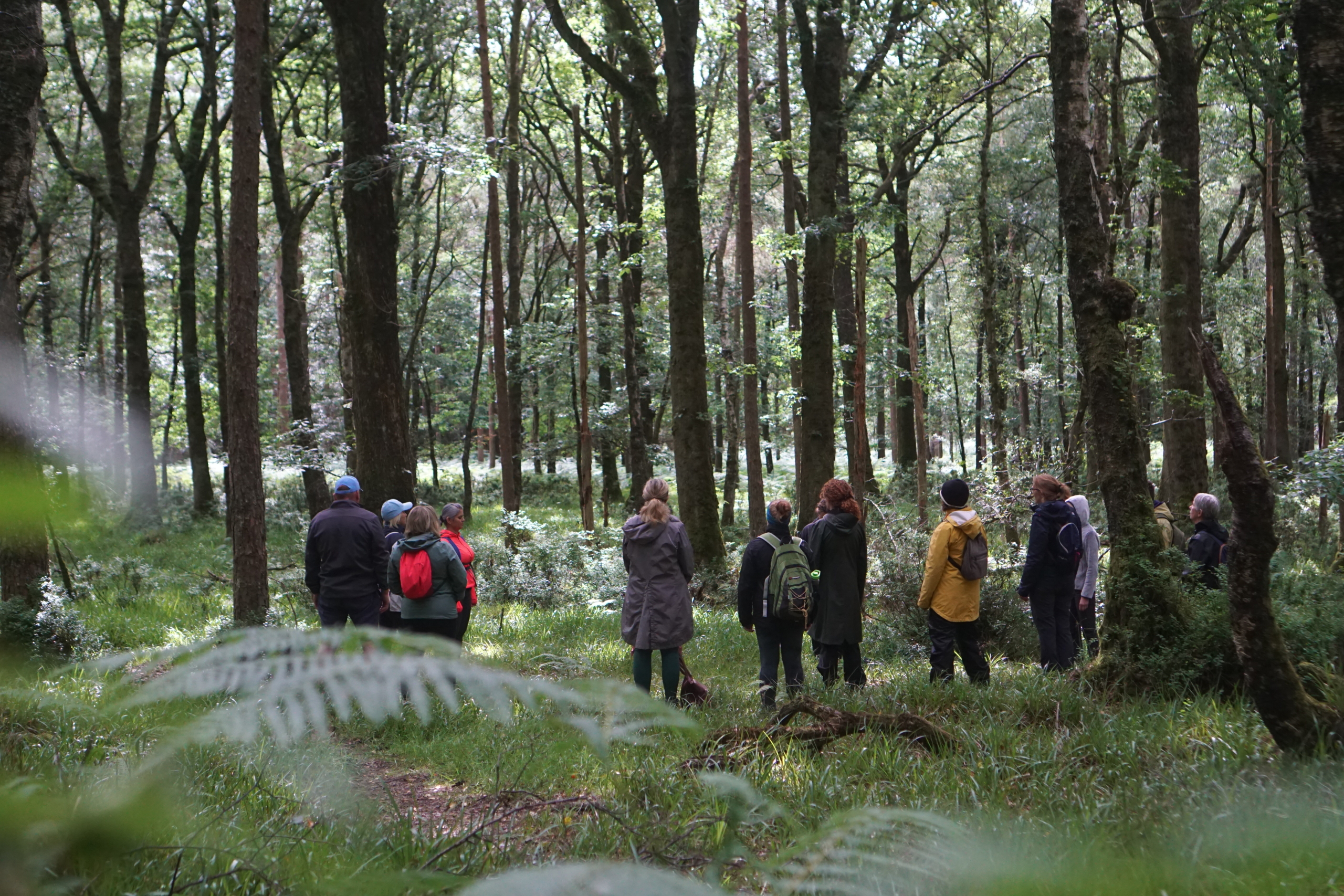
Guided forest bathing session in the Vale of Clara Nature Reserve.
.
This is something we intuitively understand in Ireland. In the Vale of Clara Nature Reserve, one of Ireland’s oldest native oak woodlands, forest bathing unfolds naturally. The towering oaks, the softness of moss underfoot, and the steady flow of the Avonmore River create a space that gently invites stillness without effort. During guided sessions, people often arrive carrying the weight of busy lives, mental noise, tension, and fatigue, but through simple sensory invitations, a gradual shift begins to take place. Breathing deepens, awareness expands, and the mind begins to quieten. This lived experience closely mirrors what Japanese research has consistently shown, that time spent in forest environments helps regulate the autonomic nervous system, reducing stress and supporting overall wellbeing (Park et al., 2010; Li, 2010).
.
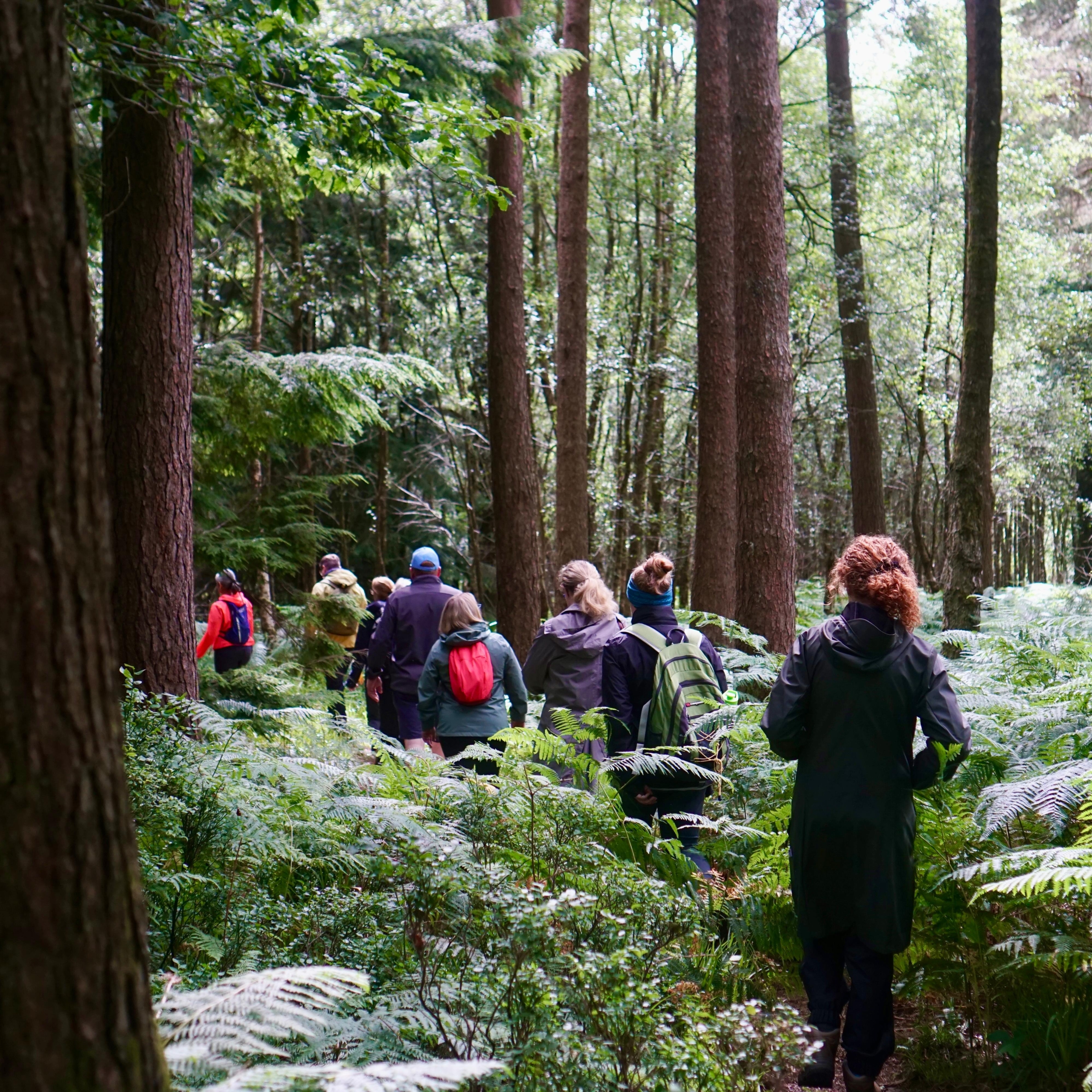
Slow, mindful walking in the Vale of Clara Nature Reserve.
.
While places like nature reserves offer a deeply immersive experience, shinrin-yoku is not limited to remote forests. In Japan, the practice is intentionally integrated into urban environments, recognising that even small, accessible green spaces can provide meaningful benefits. As M. Amos Clifford describes in Your Guide to Forest Bathing (2021), the practice is less about where you are and more about how you engage with your surroundings – an approach that makes it particularly relevant for modern, urban life. Research supports this, showing that exposure to nature, even in city settings, can significantly reduce stress and improve mental wellbeing (Twohig-Bennett & Jones, 2018).
.
This understanding has been central to my work in the Trinity College Botanic Gardens in Dublin, where I have been guiding urban forest bathing sessions with postgraduate students navigating the pressures of academic life. Over the past three years, this has developed into an ongoing study exploring how forest bathing can support student wellbeing in an urban setting. Beginning with a focus group to understand students’ needs and perceptions, the research evolved to include post-session feedback and, more recently, pre- and post-session measures of wellbeing, nature connection, and participants’ views on the suitability of the Botanic Gardens for forest bathing.
.
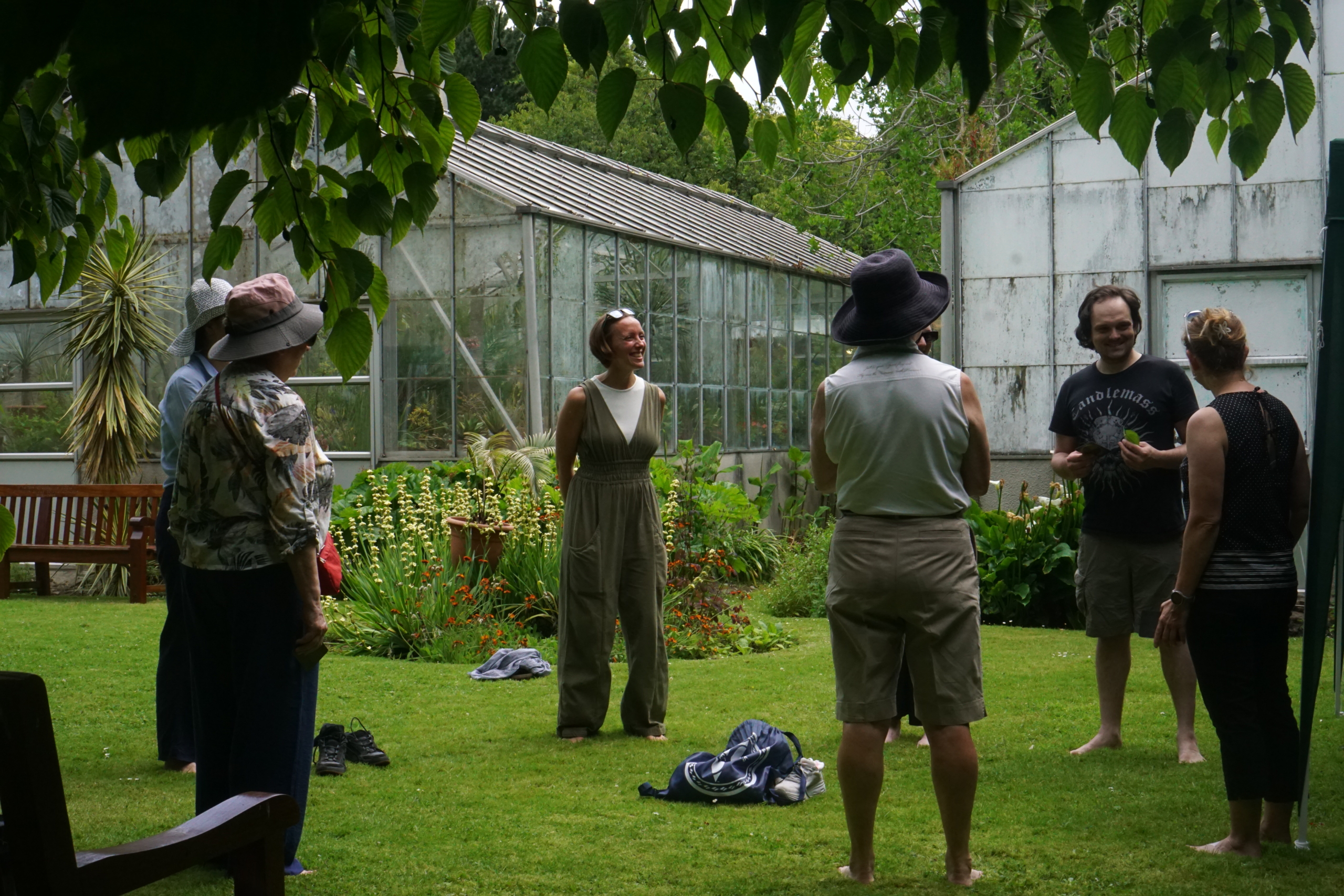
Opening circle during a forest bathing session in the TCD Botanic Gardens.
.
The results have been both encouraging and consistent. In one cohort of 58 postgraduate students, over 77% reported feeling much more relaxed after the session, while 74% experienced a significant improvement in mood. A similar proportion felt a much stronger connection to nature, alongside increases in mindfulness, feelings of being energised, and a reduction in stress . Importantly, 95% of participants agreed that the Trinity College Botanic Gardens are very suitable for forest bathing, highlighting that urban green spaces are not a lesser alternative, but a highly effective and accessible way of supporting wellbeing.
.
Participants’ reflections further deepen this understanding. Many described a noticeable reduction in overthinking and mental clutter, alongside a sense of grounding and emotional release. Others spoke about reconnecting with simple sensory experiences and feeling more present in their bodies and surroundings. For some, it offered a rare pause within the intensity of student life, creating space to reset and regain perspective. These experiences align closely with wider research showing that time in nature can reduce rumination and support emotional regulation (Bratman et al., 2015), reinforcing the role of shinrin-yoku as both a preventive and restorative practice.
.
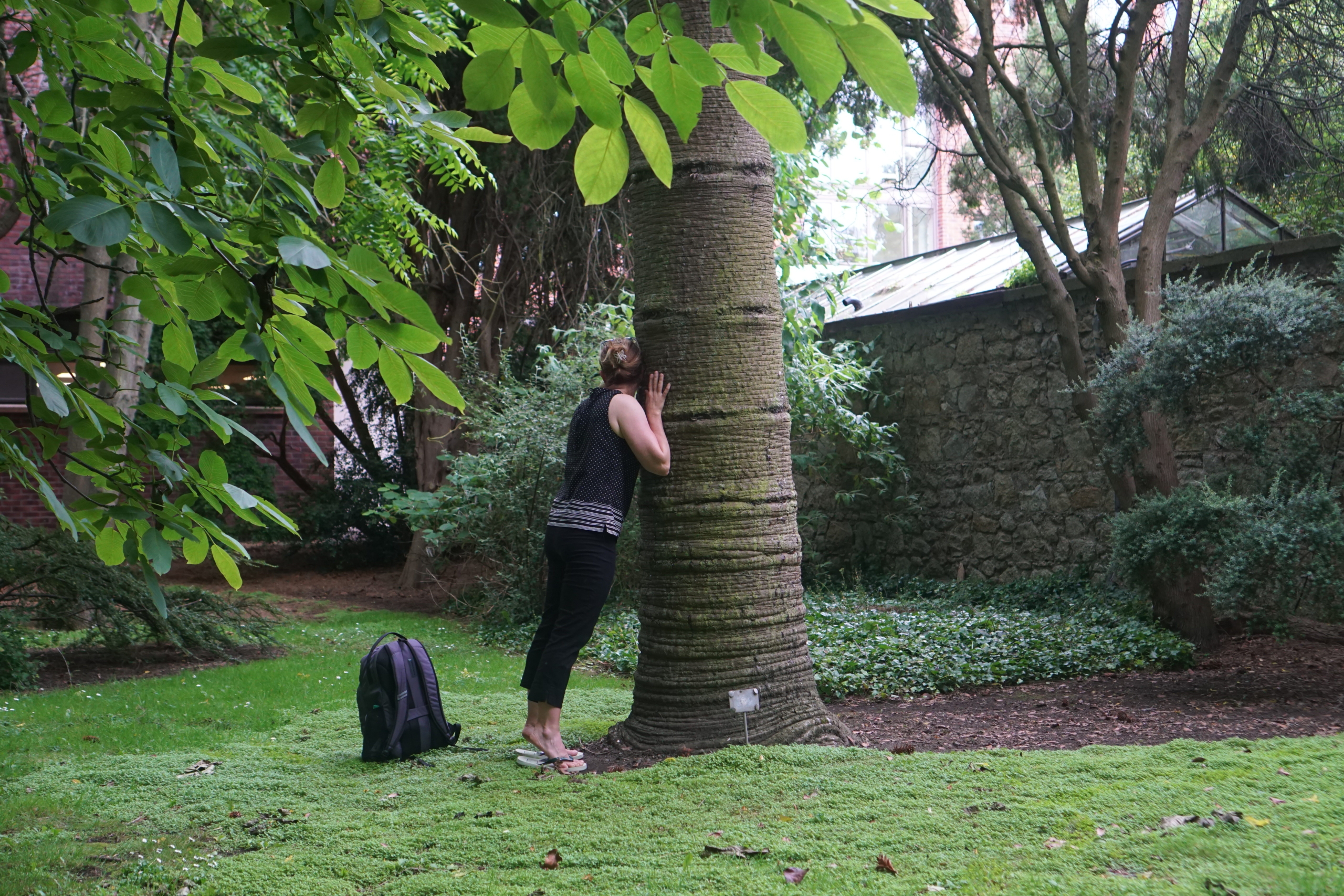
Connecting with nature during a forest bathing session in the TCD Botanic Gardens.
.
One of the most powerful aspects of shinrin-yoku is its accessibility. While ancient woodlands like the Vale of Clara offer a profound depth of experience, the practice itself does not depend on location. If leaving the city is not possible, parks, gardens, and small pockets of green space can still provide meaningful opportunities to engage with nature. What matters is not the scale of the landscape, but the quality of attention we bring to it. A short walk among trees, sitting quietly on a bench, or simply noticing the movement of leaves can begin to shift our internal state, with small moments of connection building over time into something more sustained and supportive.
.
There is something deeply resonant in bringing shinrin-yoku into an Irish context. Japan offers a framework grounded in both tradition and scientific research, while Ireland offers landscapes, both wild and urban, that naturally support this way of being. From the ancient oak woodlands of Wicklow to the calm of a city garden, the opportunity to reconnect is always present. Ultimately, shinrin-yoku reminds us that we are not separate from nature, and that by slowing down enough to notice, to listen, and to feel, we begin to return to a more balanced and grounded way of being, wherever we are.
.
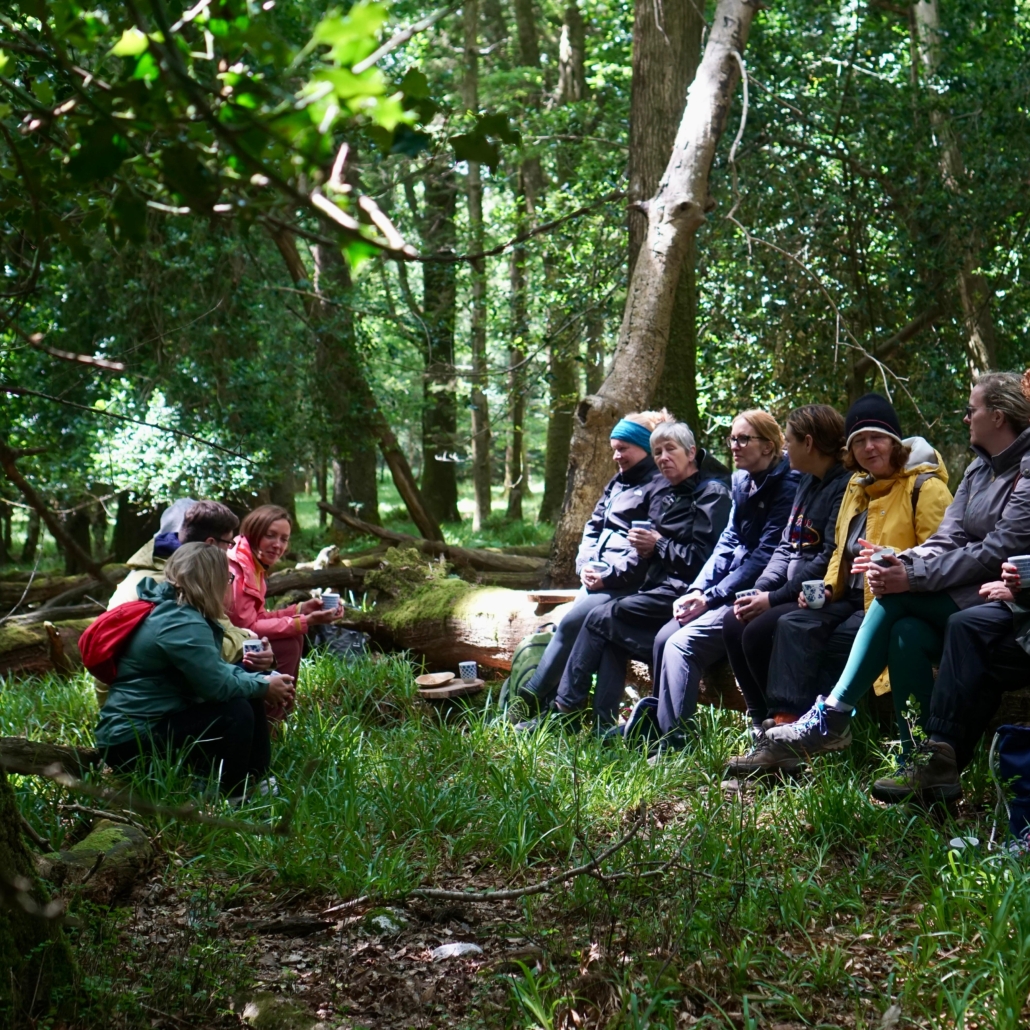
Closing tea ceremony after a shinrin-yoku session in the Vale of Clara.
.
Learn more: https://www.naturetogo.ie
.
References
Clifford, M. A. (2021). Your Guide to Forest Bathing: Experience the healing powers of nature. Red Wheel/Weiser.
Li, Q. (2018). Shinrin-Yoku: The Art and Science of Forest Bathing. Penguin Life.
Li, Q. (2010). Effect of forest bathing trips on human immune function. Environmental Health and Preventive Medicine, 15(1), 9–17.
Miyazaki, Y., Song, C., & Ikei, H. (2018). Preventive medical effects of nature therapy. Journal of Physiological Anthropology, 37(1), 5.
Park, B. J., Tsunetsugu, Y., Kasetani, T., et al. (2010). The physiological effects of Shinrin-yoku. Environmental Health and Preventive Medicine, 15(1), 18–26.
Bratman, G. N., Hamilton, J. P., Hahn, K. S., et al. (2015). Nature experience reduces rumination and subgenual prefrontal cortex activation. Proceedings of the National Academy of Sciences, 112(28), 8567–8572.
Twohig-Bennett, C., & Jones, A. (2018). The health benefits of the great outdoors. Environmental Research, 166, 628–637.
.
.
.
We are overwhelmed and delighted by the wonderful response to ‘Manifesting the Future: Yoshuku (予祝) and the Role of Ancient Japanese Wisdom in Modern Life’, the book talk by Azumi Uchitani, held in Dublin on 22nd January.
.
A huge thank you to everyone who joined us for this fully sold-out event, which brought together not only IJA members but also so many people with a deep passion for Japanese culture, philosophy, and wellbeing.
.

.
The evening opened with warm welcome remarks from Prof. Nathan Hill, Director of TCD Centre for Asian Studies, and Neil Cowhey, IJA Vice Chairperson, followed by Azumi san’s insightful, thoughtful, and inspiring presentation, introducing her new book ‘Yoshuku – The Japanese Art of Manifesting’.
.
Her talk opened doors to ancient Japanese wisdom, exploring themes of gratitude, pre-celebration, inner balance, community, and how nurturing strong ‘roots’ can help our intentions blossom in modern life.
.
A huge thank you also goes to the TCAS team and Trinity Long Room Hub for being such wonderful hosts and for their care and support in making this event such a success.
.
Photos: TCAS
.


.
.
.
The Ireland Japan Association is proud to announce that it has been awarded the Commendation of the Foreign Minister of Japan, a prestigious recognition presented to organisations and individuals worldwide who have made outstanding contributions to strengthening ties with Japan.
.
This honour acknowledges the IJA’s decades of work promoting economic, cultural, and educational connections between Ireland and Japan. In 2025, the IJA joins a distinguished group of 58 organisations and 173 individuals worldwide receiving the award.
.

.
In its commendation, the Ministry of Foreign Affairs of Japan noted:
“The IJA has helped not only to promote and develop economic and business relations between Japan and Ireland for many years, but also to promote Japanese language education and to foster human resource development in Japanese studies in Ireland. The IJA also runs regular workshops where participants can experience traditional Japanese culture. Through these and other activities, the IJA facilitates people-to-people exchanges while strengthening and promoting mutual understanding between Japan and Ireland.”
.
Founded in 1990 from the merger of the Ireland Japan Society (est. 1969) and the Ireland Japan Economic Association (est. 1974), the IJA has been a cornerstone of Ireland-Japan relations for more than 35 years. Its mission has always been to act as a bridge between the two countries, creating opportunities for collaboration in business, culture, and education.
.
Catherine Grennell-Whyte, Chairperson of the IJA, said:
“We are deeply honoured to receive this commendation from the Government of Japan. It is a powerful recognition of the work the IJA has carried out to support economic cooperation and trade links between Ireland and Japan, alongside our cultural and educational programmes. For more than three decades, our Association has been dedicated to fostering lasting connections, and this award is a testament to the strength of the friendship between our two nations.”
We would like to extend a heartfelt thank you to everyone who joined us on Thursday, April 10th for the exclusive Sake Tasting Workshop, hosted in collaboration with our 2025 Patron Member – Yamamori.
.
Held at the beautiful Yamamori North City / Tengu, the evening was a true celebration of Japanese culture, springtime, and community spirit. The event brought together both IJA members and non-members for a unique blend of networking and cultural exploration through the world of Japanese sake.
.

.
A very special thank you goes to our guest speaker, Sake Sommelier Sarika Seki Hussey, whose expertise, passion, and warm personality guided us through a curated selection of premium Japanese sake. Each sake was thoughtfully paired with delicious bites crafted by the talented Yamamori team, making the tasting not only educational but truly memorable.
.
We are also immensely grateful to our event co-hosts and partners at Yamamori, who are celebrating a remarkable 30 years in business this year. This workshop was just one of the many exciting events planned to mark their anniversary, and we are incredibly proud to have them as our IJA Patron Member in 2025.
.
Events like this are a wonderful reminder of the strong bonds between Japan and Ireland, and we are delighted to be able to bring people together to share experiences, knowledge, and of course – fantastic food and drink!
.
We look forward to seeing you at our next event! Arigatou gozaimasu & Sláinte!
.

.

.

.

.

.

.

.

.

.

.

.
Photos: Yamamori & Eddie Hughes, IJA Council
.
.
.

We are thankful to everyone who joined us for the ‘Create Your 2025: New Year Japanese Calligraphy Workshop’ with the wonderful artist, educator, and writer Azumi Uchitani. Hosted in collaboration with ElectroRoute, this unique event was an inspiring way to welcome the new year with creativity, mindfulness, and intention.
.

.
This special workshop guided participants through the art of Japanese calligraphy, blending meditation and mindful practice to align body, mind, and spirit. Under Azumi’s expert instruction, we explored the theme of NAGARE (流) – FLOW, creating a Kanji symbol together to serve as an anchor for the year ahead.
.
Through a beautifully structured session, participants:
.

.
A heartfelt thank you to all participants for bringing their energy, enthusiasm, and creativity to this experience and we hope that your Kanji symbol serves as a meaningful reminder throughout the year.
.
A special thank you to Azumi Uchitani for her wisdom, guidance, and signature method, making this workshop accessible and enriching for all. Her ability to blend tradition with personal expression left a lasting impression on everyone present.
.
Finally, our thanks goes to ElectroRoute team for their incredible support in making this event a success and being fantastic hosts as always.
.
We look forward to welcoming you to more events this year that encourage self-expression, growth, and connection.
.
Read more about the workshop details on Azumi Uchitani’s website: https://www.azumiuchitani.com/create-2025-japanese-calligraphy-dublin/
Photos: Azumi Uchitani, Kevin O’Neill
.

.

.

.

.

.

.

.

.

.

.

.

.

.
.
.
The IJA Council would like to extend a heartfelt gratitude to everyone who attended the annual IJA Bounenkai End of Year Party on 28th November at Yamamori Izakaya Japas & Sake in Dublin. Your presence truly made the evening special, and we hope you enjoyed celebrating the culmination of this year’s hard work.
.

.
Catherine Grennell-Whyte, IJA Chairperson, warmly welcomed event guests and initiated the festivities with a traditional Japanese Kanpai toast.
.
We would like to express our deepest appreciation to H.E. Mr. Norio Maruyama, Ambassador of Japan to Ireland and IJA Patron, for honouring us with his presence and delivering a heartfelt farewell message as he concludes his service in Ireland and prepares to return to Japan.
.
Our sincere thanks also go to the IJA event team and our exceptional hosts at Yamamori Izakaya Japas & Sake for their warm hospitality and for ensuring the event was a resounding success.
.
Here’s to creating more wonderful memories together in the future!
.

.

.
.
.

.

.

.

.

.

.

.
Photos: Eddie Hughes & Miyu Ishikawa
.
.
We had a wonderful time at the Ikebana Autumn Workshops in October, diving into the beautiful world of Ikebana, the traditional Japanese art of flower arranging and learning from the esteemed Tomoko Sempo Yanagi, Professor of Ikenobo Ikebana Society and Chairperson of Ikenobo Ikebana UK & Ireland Group.
.

.
We would like to thank Tomoko san for her expertise, passion, and guidance throughout the workshops, and all the participants who joined us in celebrating and exploring Japanese culture during this seasonal event. It was a weekend filled with inspiration, education, and new connections.
.
A special thanks to Pauline and the team at the Warrenmount Education Centre in Dublin for the warm welcome and for providing a comfortable space for us all to learn and create.
.


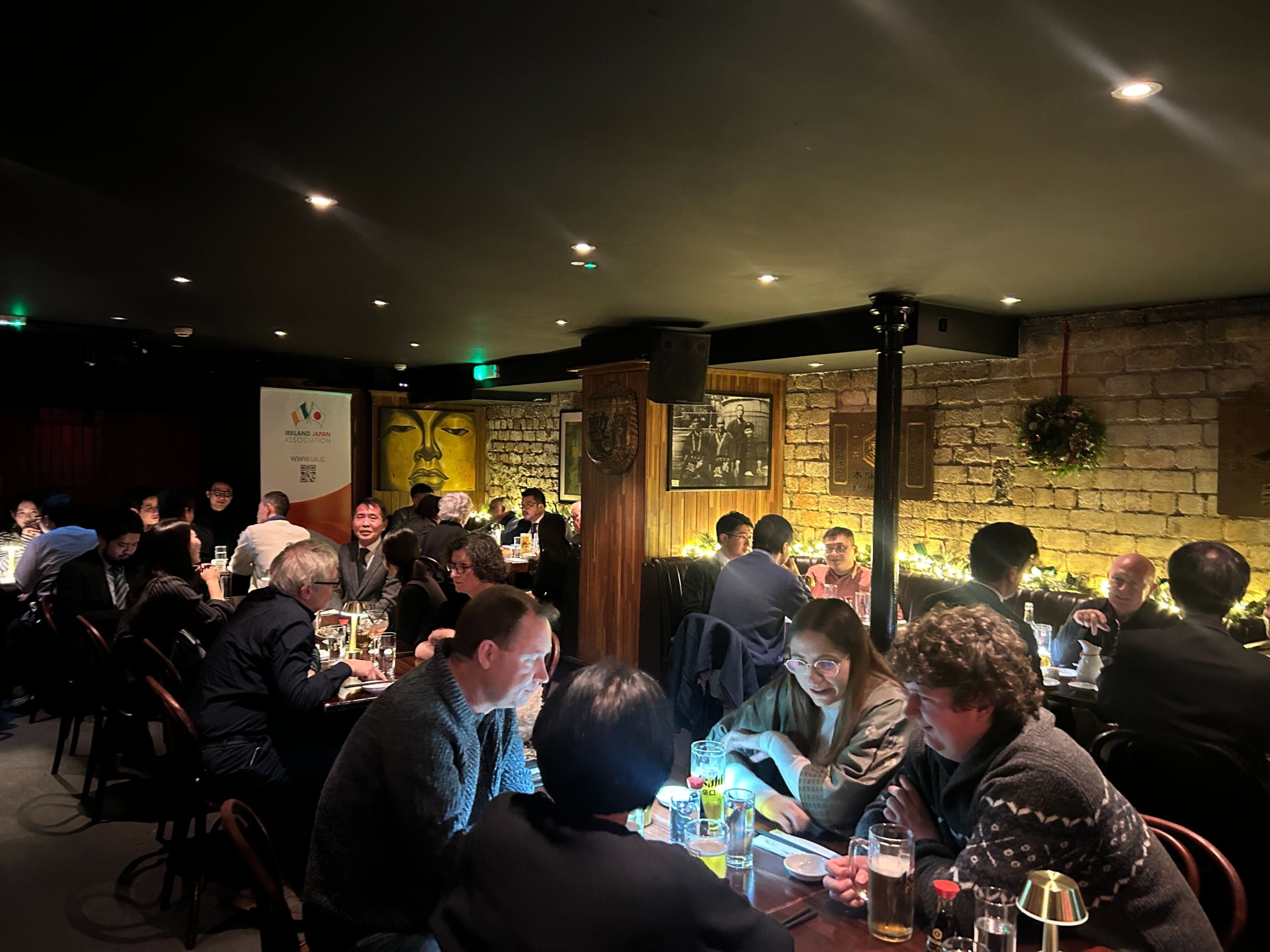
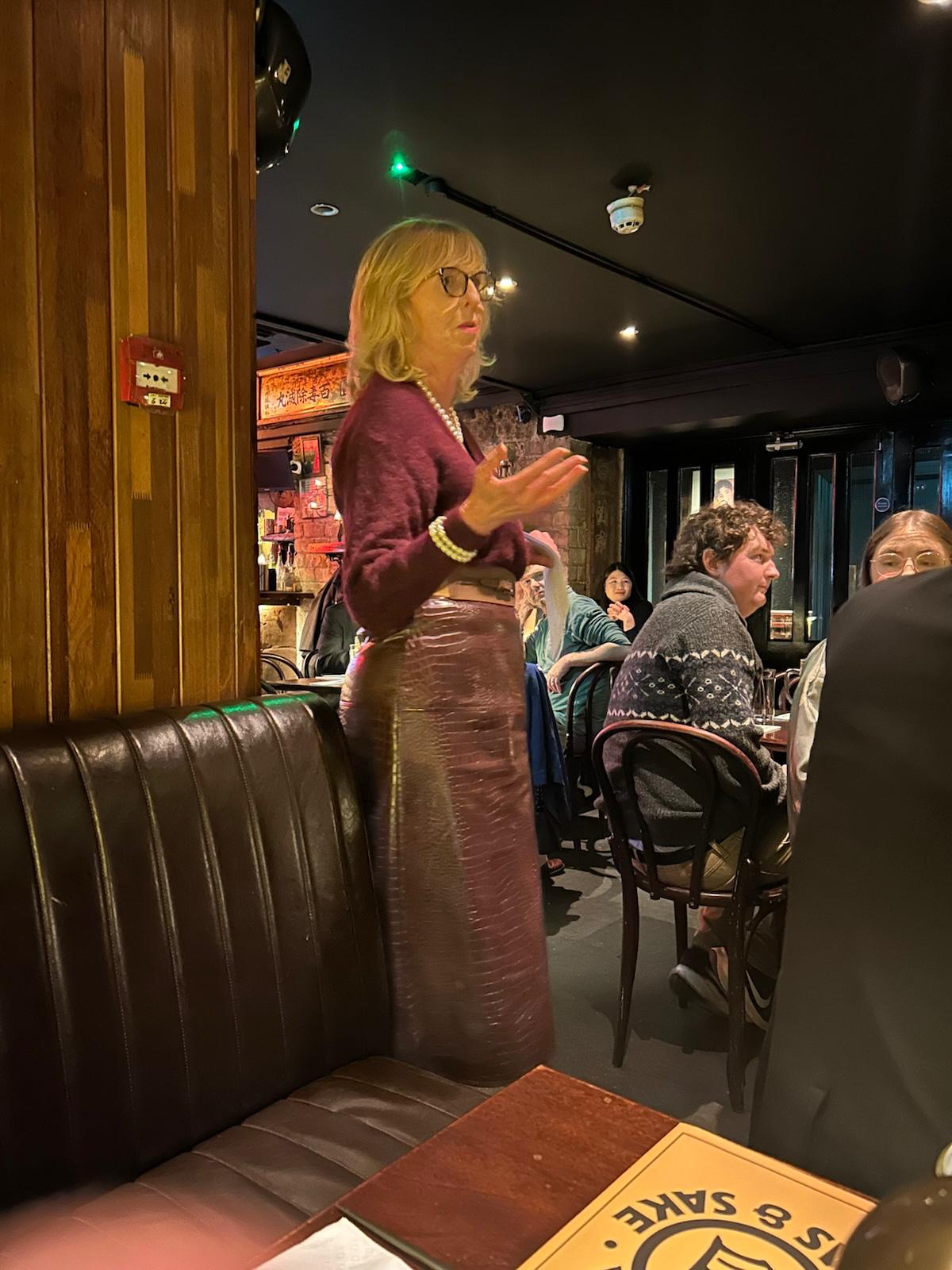
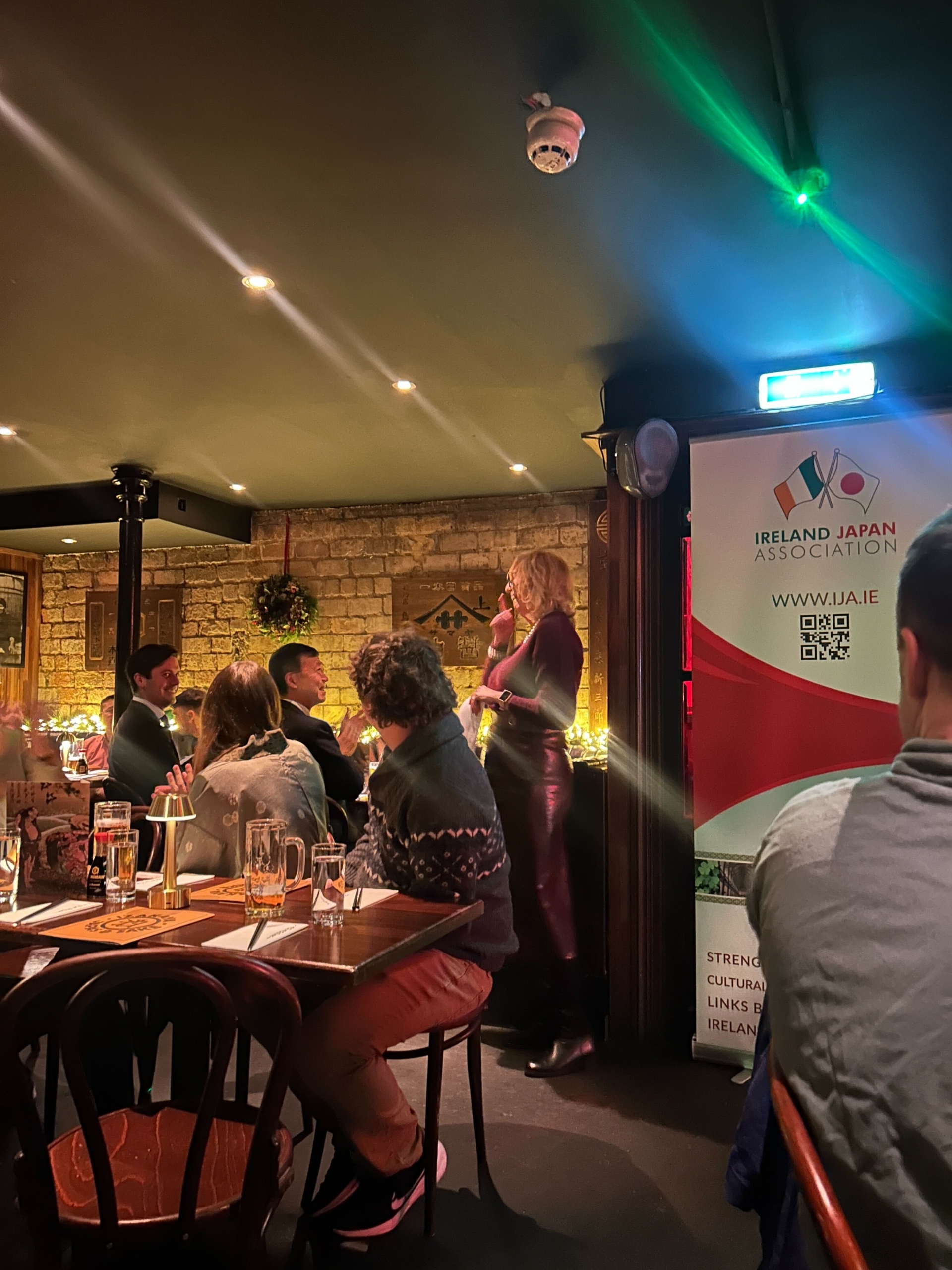
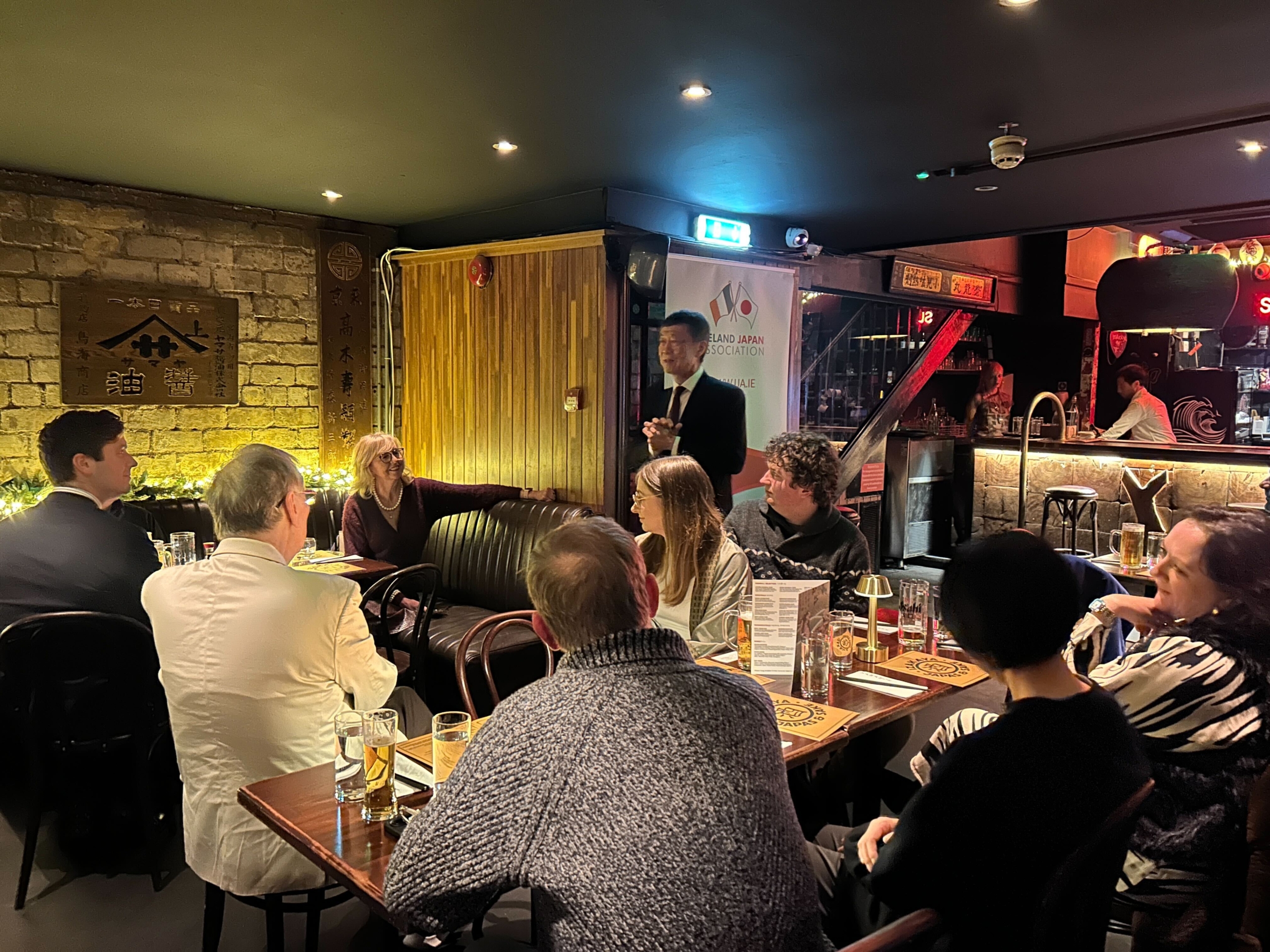
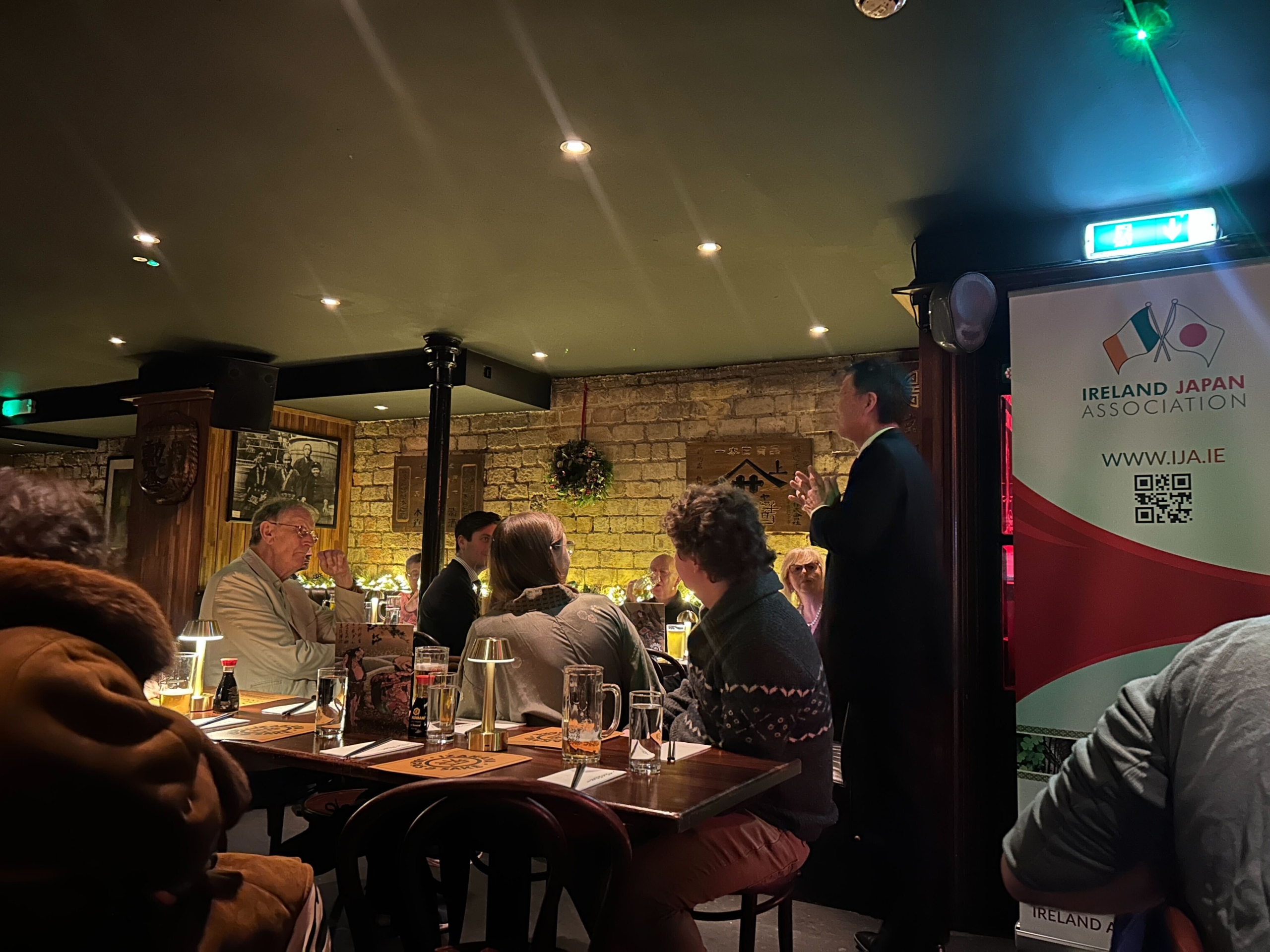
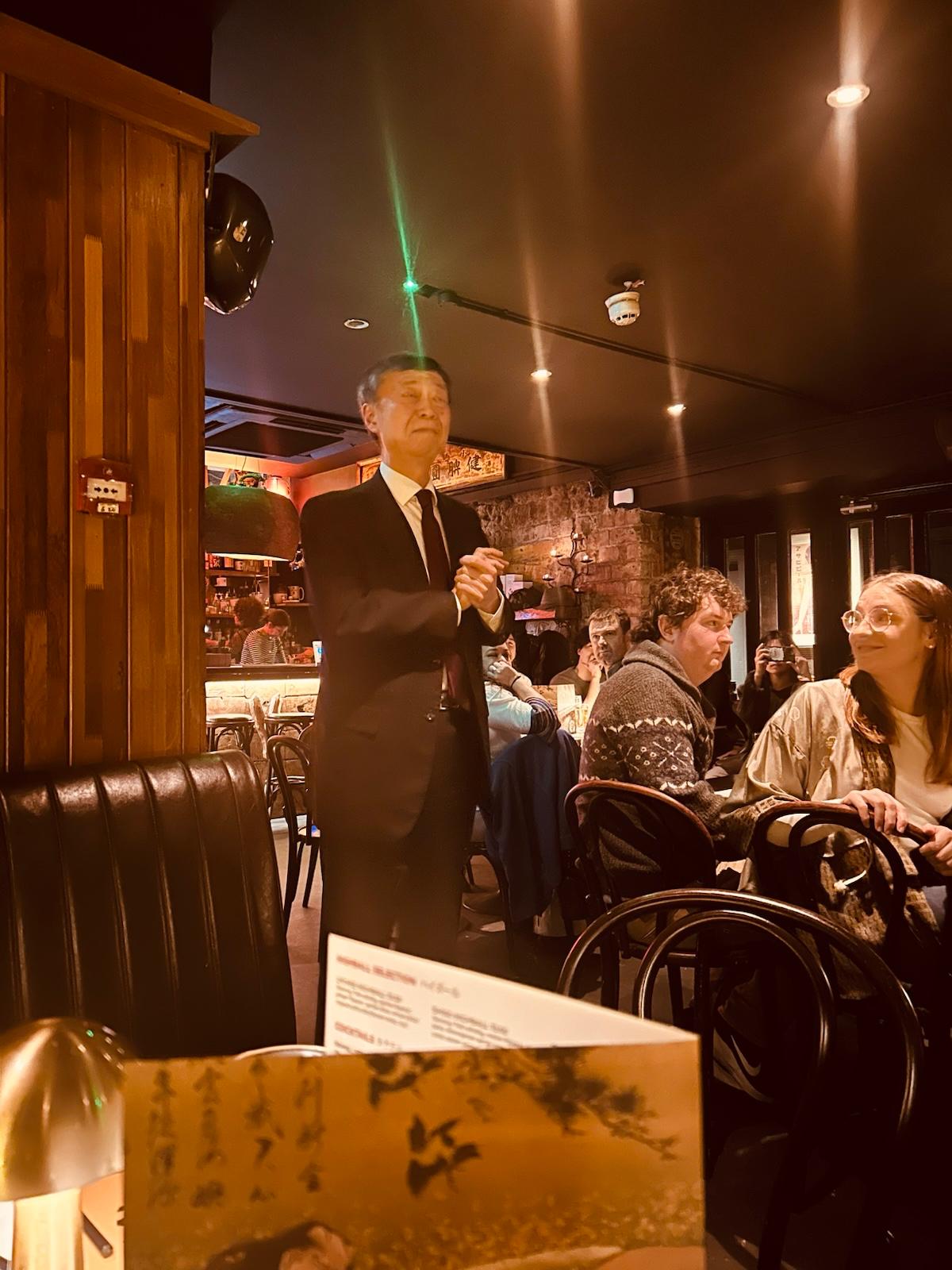
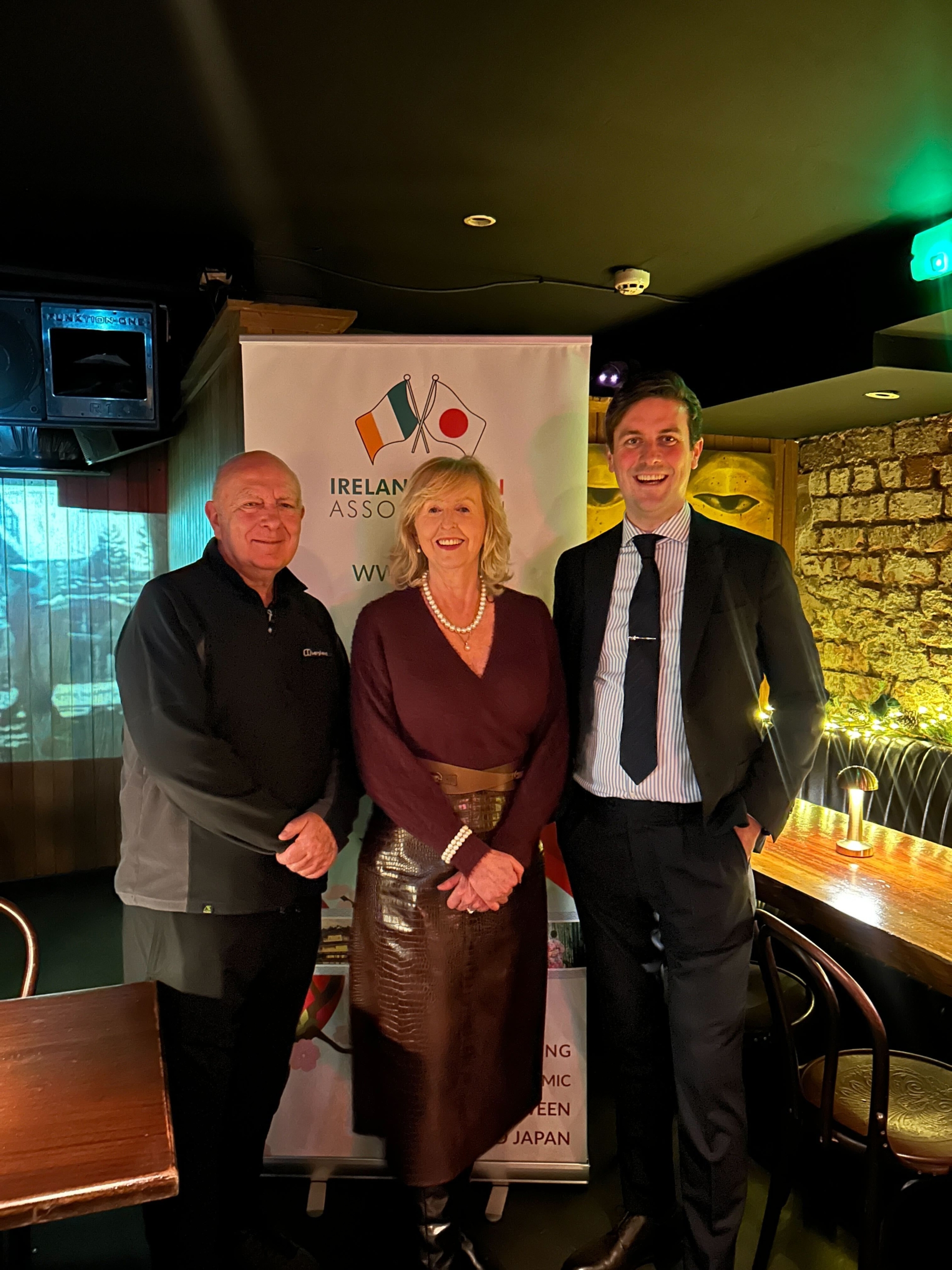
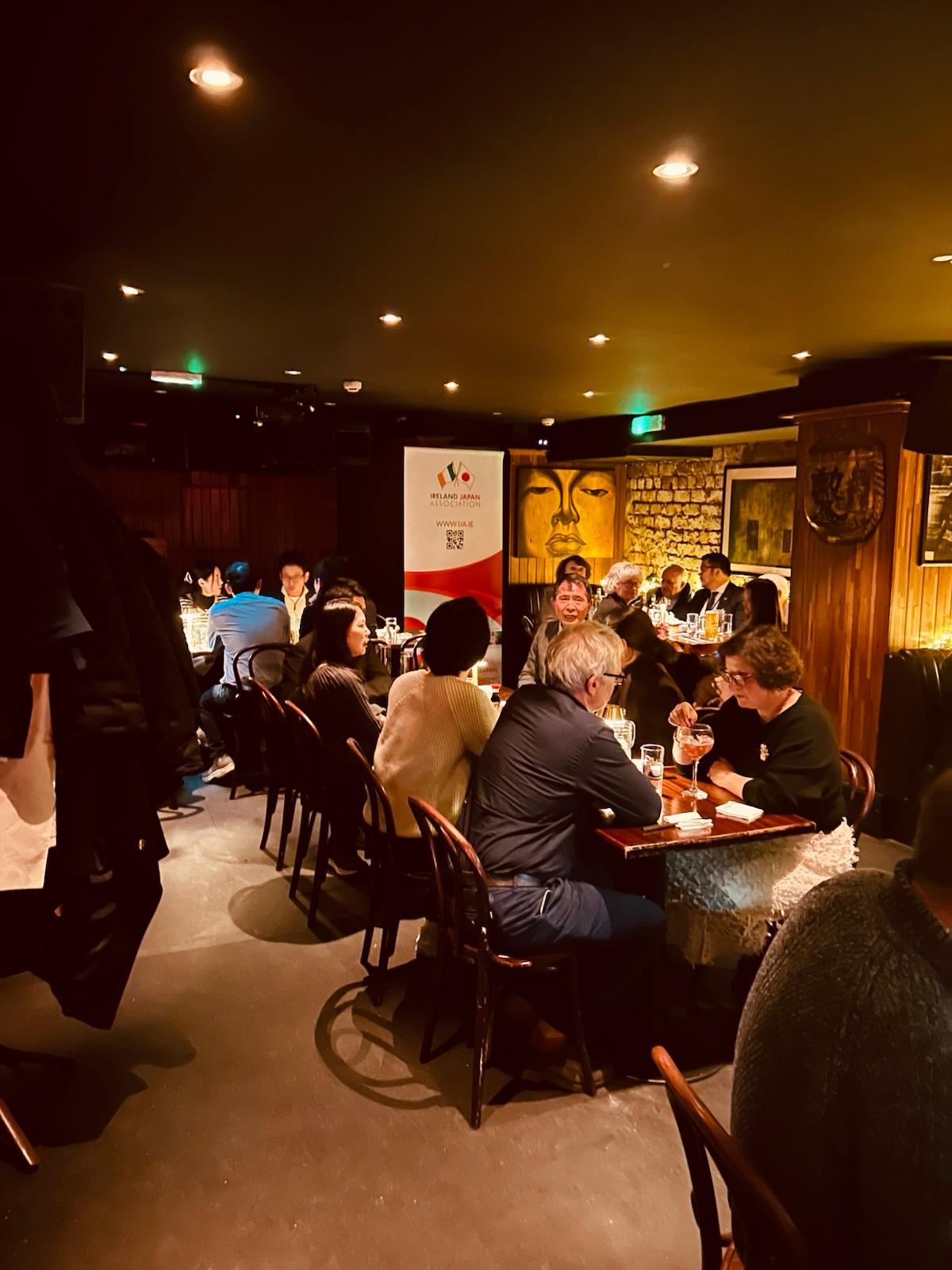
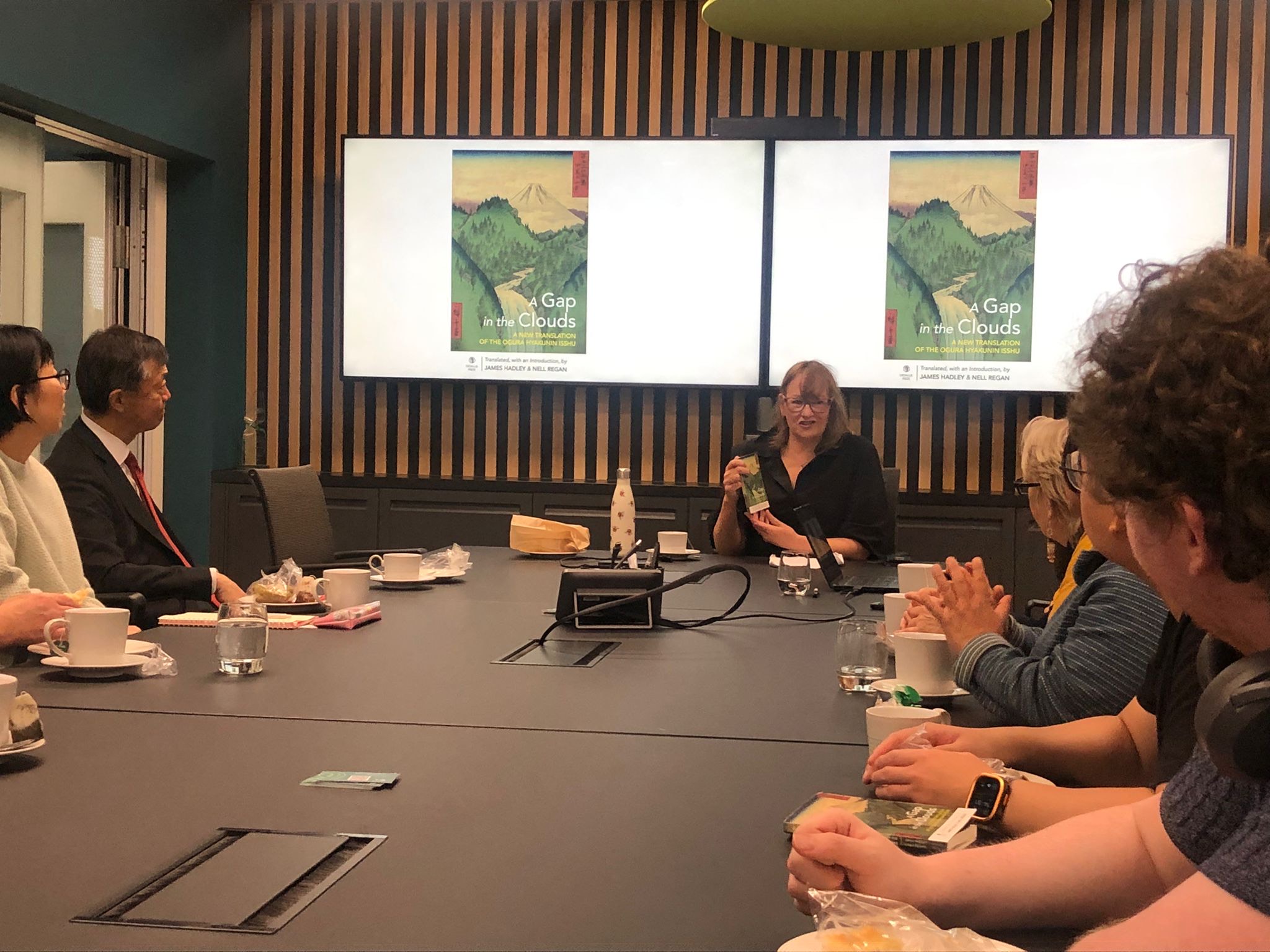
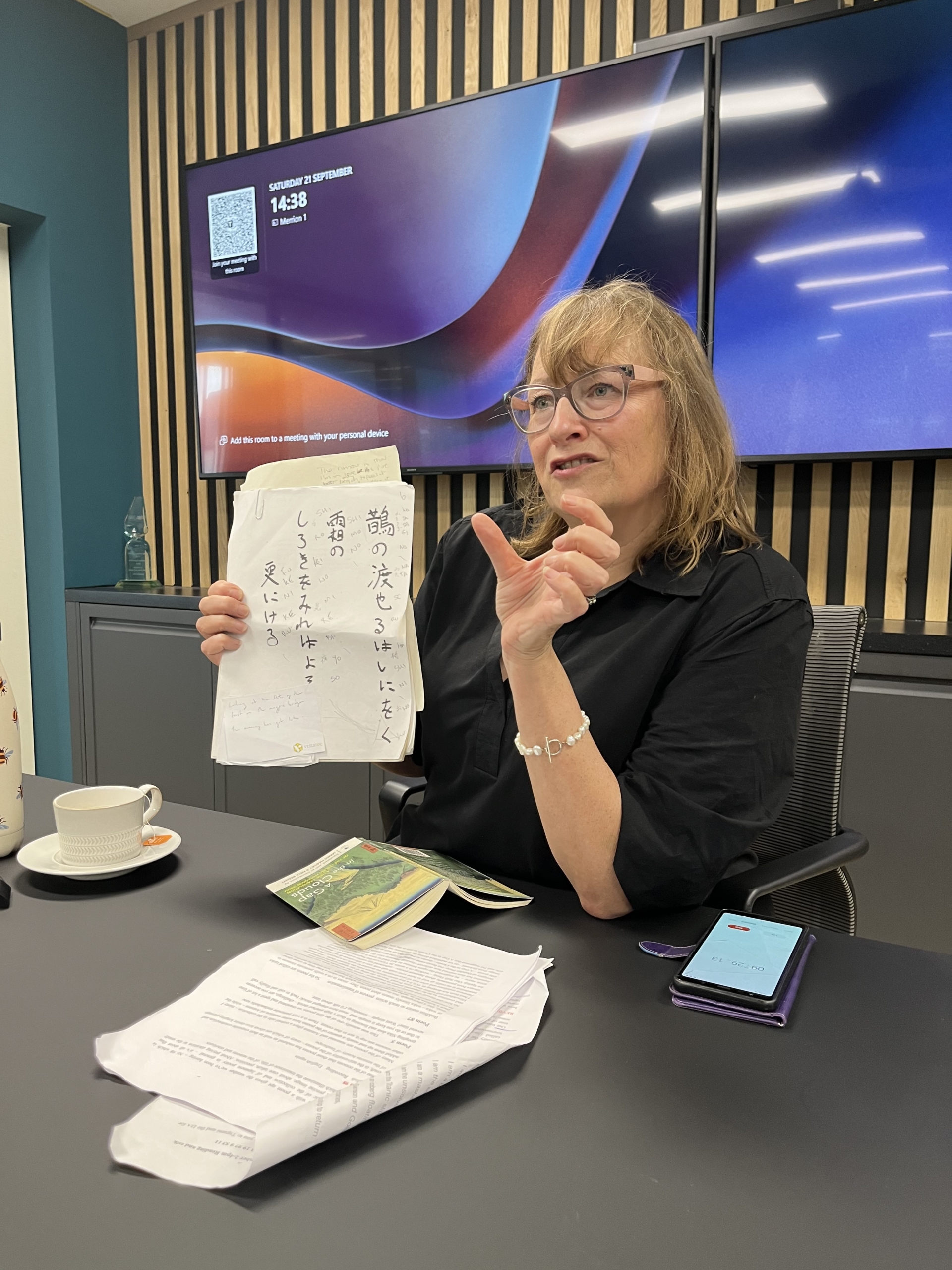
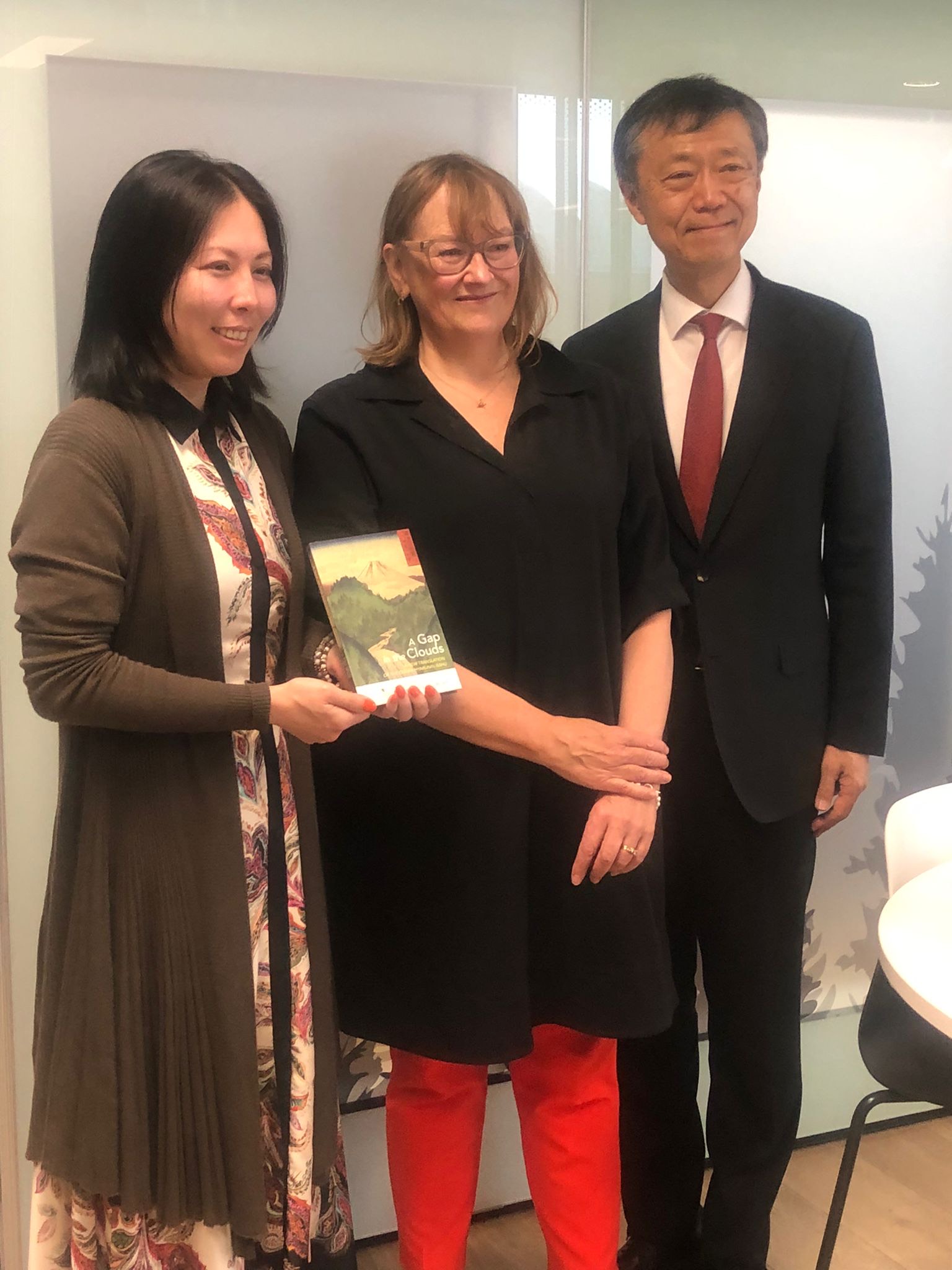
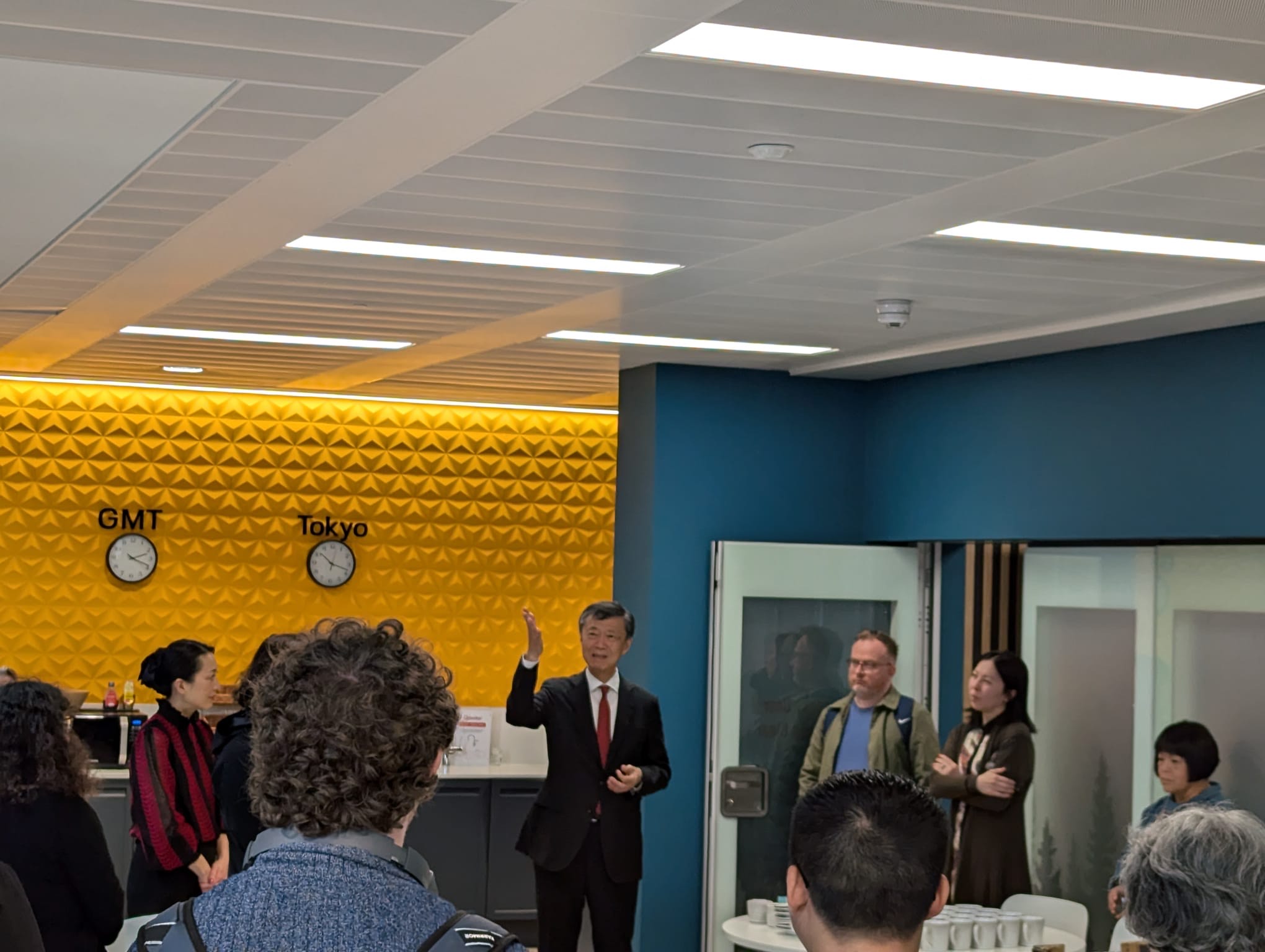
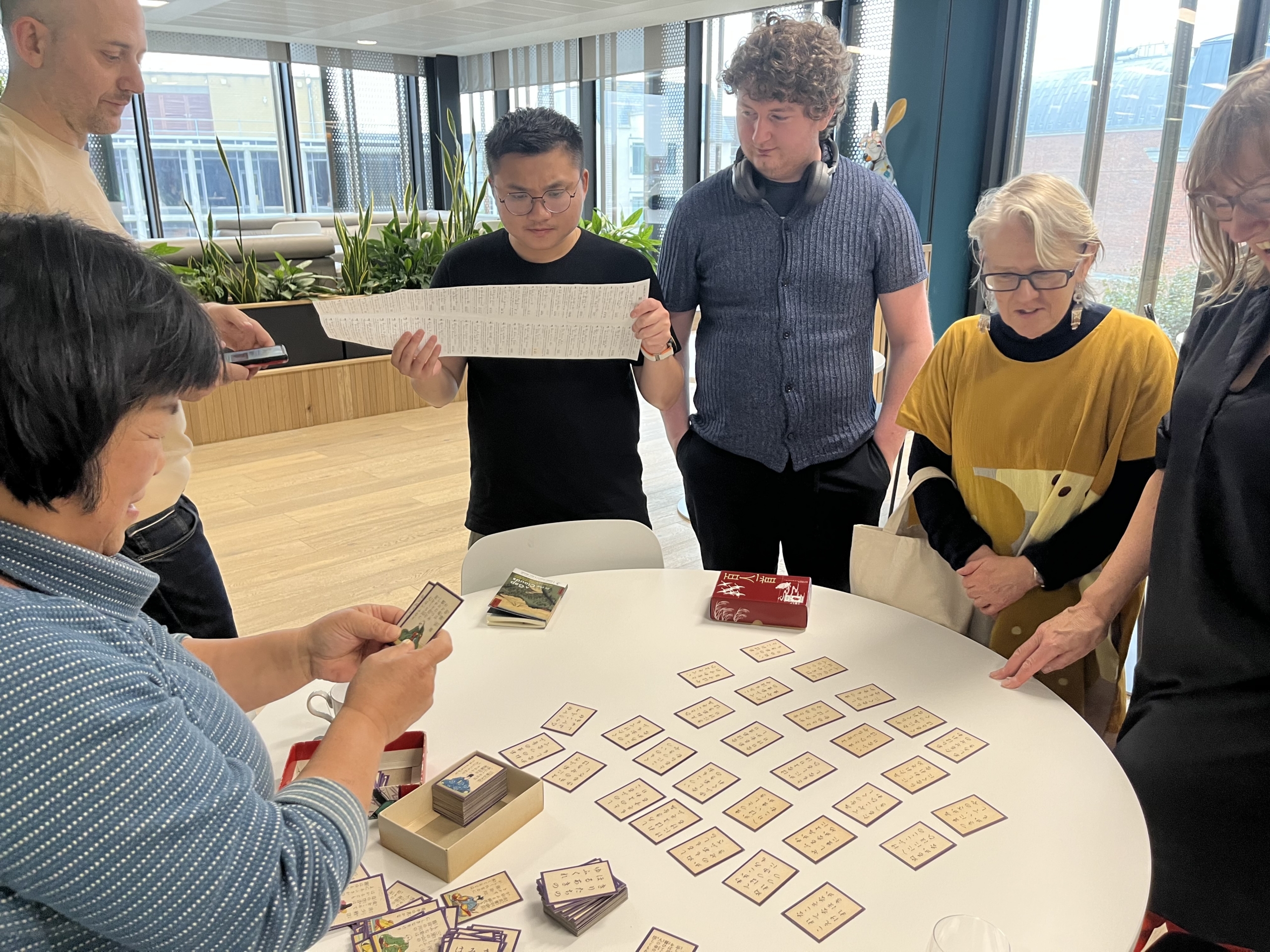
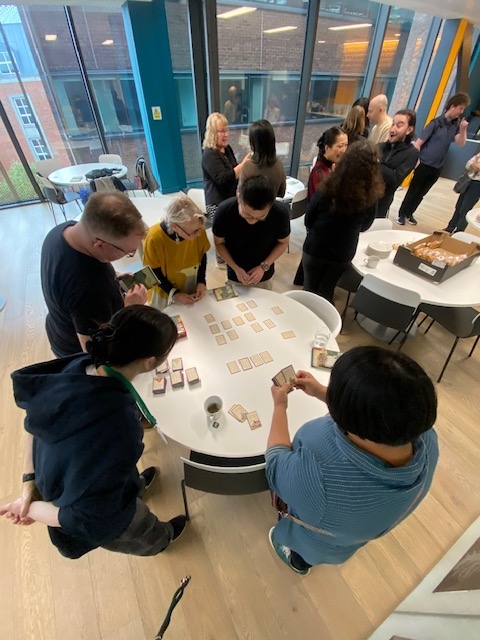
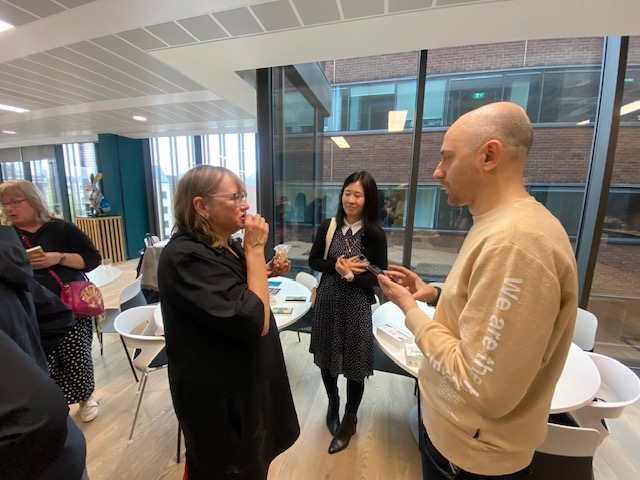
The IJA Japanese Book Club event featuring Irish writer and poet Nell Regan was held on Saturday, 21st September and was hosted by ElectroRoute, an IJA corporate member, in Dublin city center.
.

.
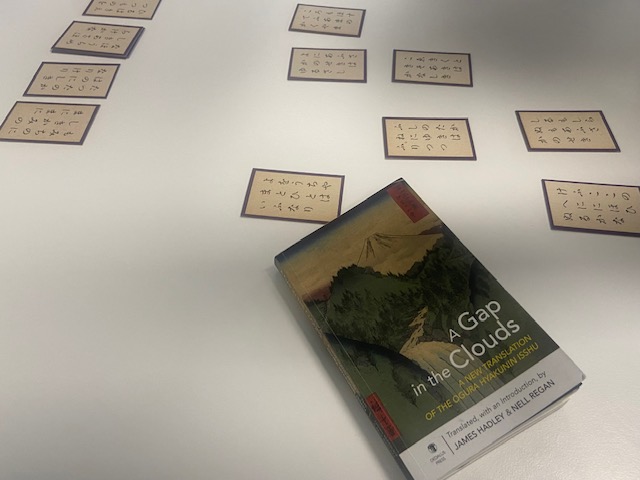
The event provided a special opportunity for book club members and Japanese poetry enthusiasts to meet Nell Regan in person and learn about the book ‘百人一首 – 100 Poems by 100 Poets’, as well as her work translating it into English with James Hadley. Nell’s presentation was captivating, allowing us to delve into the richness of Japanese literature and appreciate her remarkable talent for poetry.
.

.
We extend our gratitude to Ambassador Maruyama for joining the event and reading some of the original poems from the book in Japanese.
.

.
Attendees also had the chance to engage in a traditional Japanese card game and savor delicious, freshly baked Japanese treats provided by Gopan Bakery.
Special thanks to Tsugumi Yamamoto, IJA Vice Chairperson, for coordinating this event, and to our wonderful hosts at ElectroRoute for their excellent hospitality throughout the event.
.

.

.

.

.

.

.
.
.
Join our FREE Japanese conversation group meetings and improve your Japanese conversational skills in an informal, friendly atmosphere!
Meetings take place twice a month on Tuesdays from 8-9 p.m. via Zoom.
To join the group, please sign up by sending email to: info@ija.ie.

Session Format
The group meets online on Tuesdays twice a month
Online Sessions
60min (30min Beginner / 30min Intermediate)
* First 30min of the session – Beginner-friendly introduction & practice
* Last 30min of the session – Intermediate conversation & expansion
* End with 5 min “今日の一言” – one practical sentence to use daily.
In-Person Meetups
Every 2 months – 2 hour long in-person meeting to connect with others, socialise and practice your language skills. Date and venue will be announced for each upcoming meeting.
Topics
We will share the specific topic for each session with registered group members in advance, along with the Zoom link. Sessions are facilitated by native Japanese speaker/s.
Who can join?
We warmly encourage you to join our group sessions – new members are always welcome, and we would love to meet you!
* IJA Members
* University students (18+) studying Japanese and former JET programme participants are welcome to join up to 3 complimentary sessions to try out the group before deciding on membership.
* Non-members wishing to attend are kindly welcome to become IJA members before joining the group.
Please Note!
* This conversation group is a fun activity for people who enjoy speaking Japanese, not a language course or class.
* Suitable for participants aged 18+ only.
For more information or to sign up, please contact us: info@ija.ie
.
.
.
.
.

.
Following the July meeting, we will take a well-deserved summer break, and our next online Book Club session will take place in October, with another meeting planned for January 2027.
.
.