By Dr. Kamila Kwasniewska Nature To Go and Trinity College Dublin, Discipline of Botany
.
There is a quiet wisdom in the Japanese practice of shinrin-yoku, or forest bathing, that feels deeply at home in Ireland. Developed in Japan in the 1980s as a response to rising stress and lifestyle-related illness, shinrin-yoku is now recognised as a preventive health practice, with research showing its ability to reduce cortisol levels, lower blood pressure, and improve mood and immune function (Miyazaki et al., 2018; Park et al., 2010). At its core, shinrin-yoku is not about hiking or physical exertion, but about slowing down, engaging the senses, and allowing the nervous system to settle in the presence of trees. As described by Dr Qing Li in Shinrin-Yoku: The Art and Science of Forest Bathing (2018), it is both a scientifically grounded and deeply intuitive practice that reconnects us with the natural world.
.
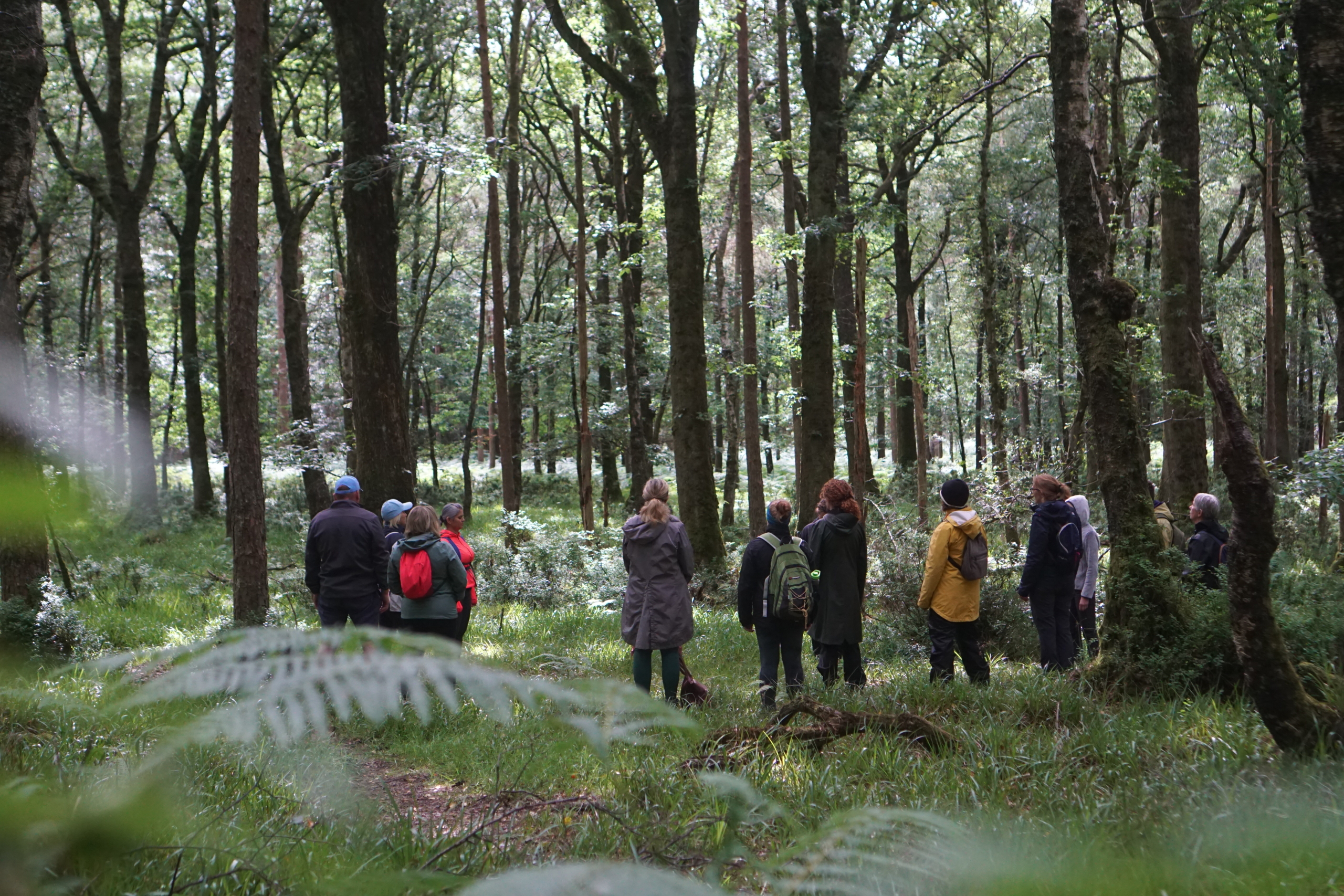
Guided forest bathing session in the Vale of Clara Nature Reserve.
.
This is something we intuitively understand in Ireland. In the Vale of Clara Nature Reserve, one of Ireland’s oldest native oak woodlands, forest bathing unfolds naturally. The towering oaks, the softness of moss underfoot, and the steady flow of the Avonmore River create a space that gently invites stillness without effort. During guided sessions, people often arrive carrying the weight of busy lives, mental noise, tension, and fatigue, but through simple sensory invitations, a gradual shift begins to take place. Breathing deepens, awareness expands, and the mind begins to quieten. This lived experience closely mirrors what Japanese research has consistently shown, that time spent in forest environments helps regulate the autonomic nervous system, reducing stress and supporting overall wellbeing (Park et al., 2010; Li, 2010).
.
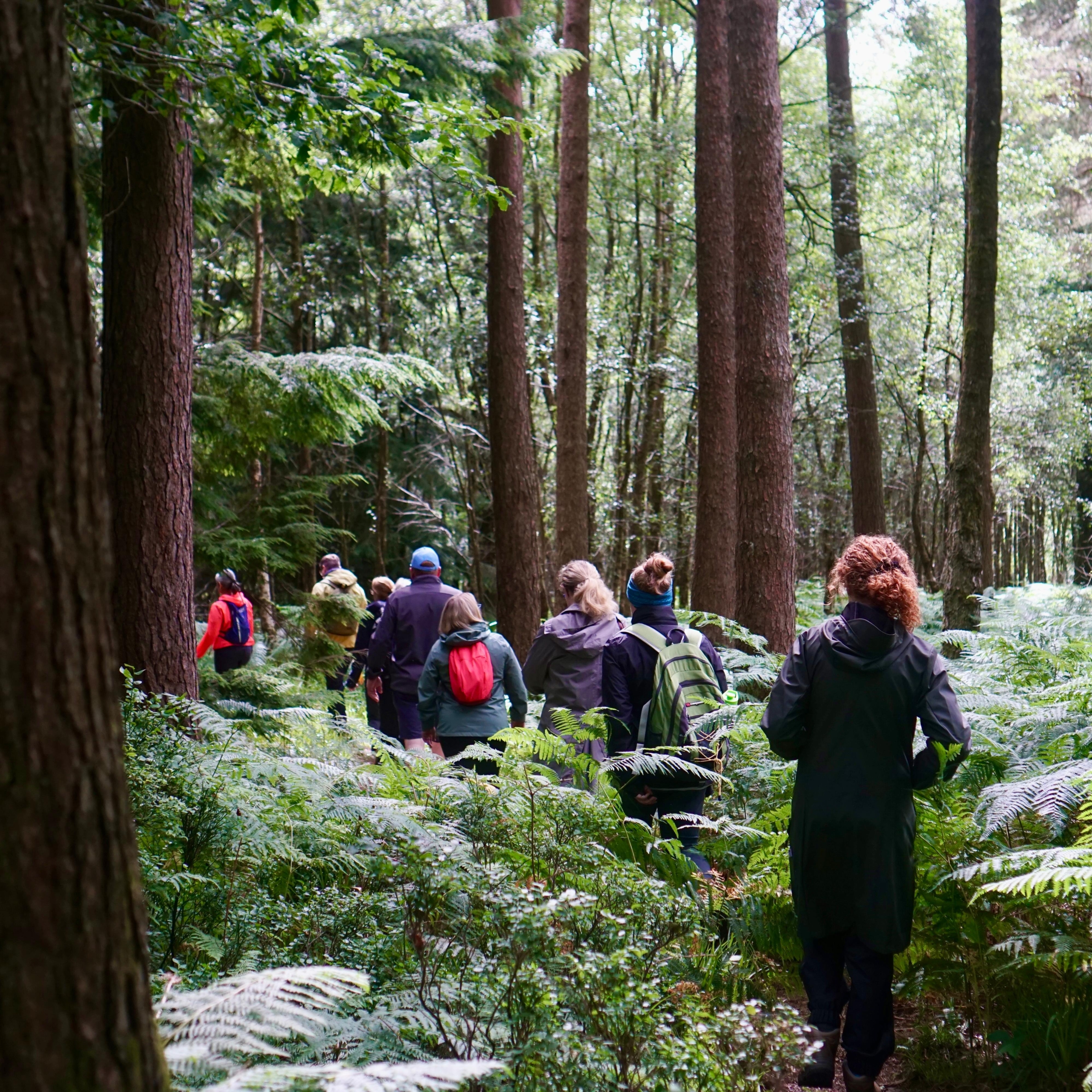
Slow, mindful walking in the Vale of Clara Nature Reserve.
.
While places like nature reserves offer a deeply immersive experience, shinrin-yoku is not limited to remote forests. In Japan, the practice is intentionally integrated into urban environments, recognising that even small, accessible green spaces can provide meaningful benefits. As M. Amos Clifford describes in Your Guide to Forest Bathing (2021), the practice is less about where you are and more about how you engage with your surroundings – an approach that makes it particularly relevant for modern, urban life. Research supports this, showing that exposure to nature, even in city settings, can significantly reduce stress and improve mental wellbeing (Twohig-Bennett & Jones, 2018).
.
This understanding has been central to my work in the Trinity College Botanic Gardens in Dublin, where I have been guiding urban forest bathing sessions with postgraduate students navigating the pressures of academic life. Over the past three years, this has developed into an ongoing study exploring how forest bathing can support student wellbeing in an urban setting. Beginning with a focus group to understand students’ needs and perceptions, the research evolved to include post-session feedback and, more recently, pre- and post-session measures of wellbeing, nature connection, and participants’ views on the suitability of the Botanic Gardens for forest bathing.
.
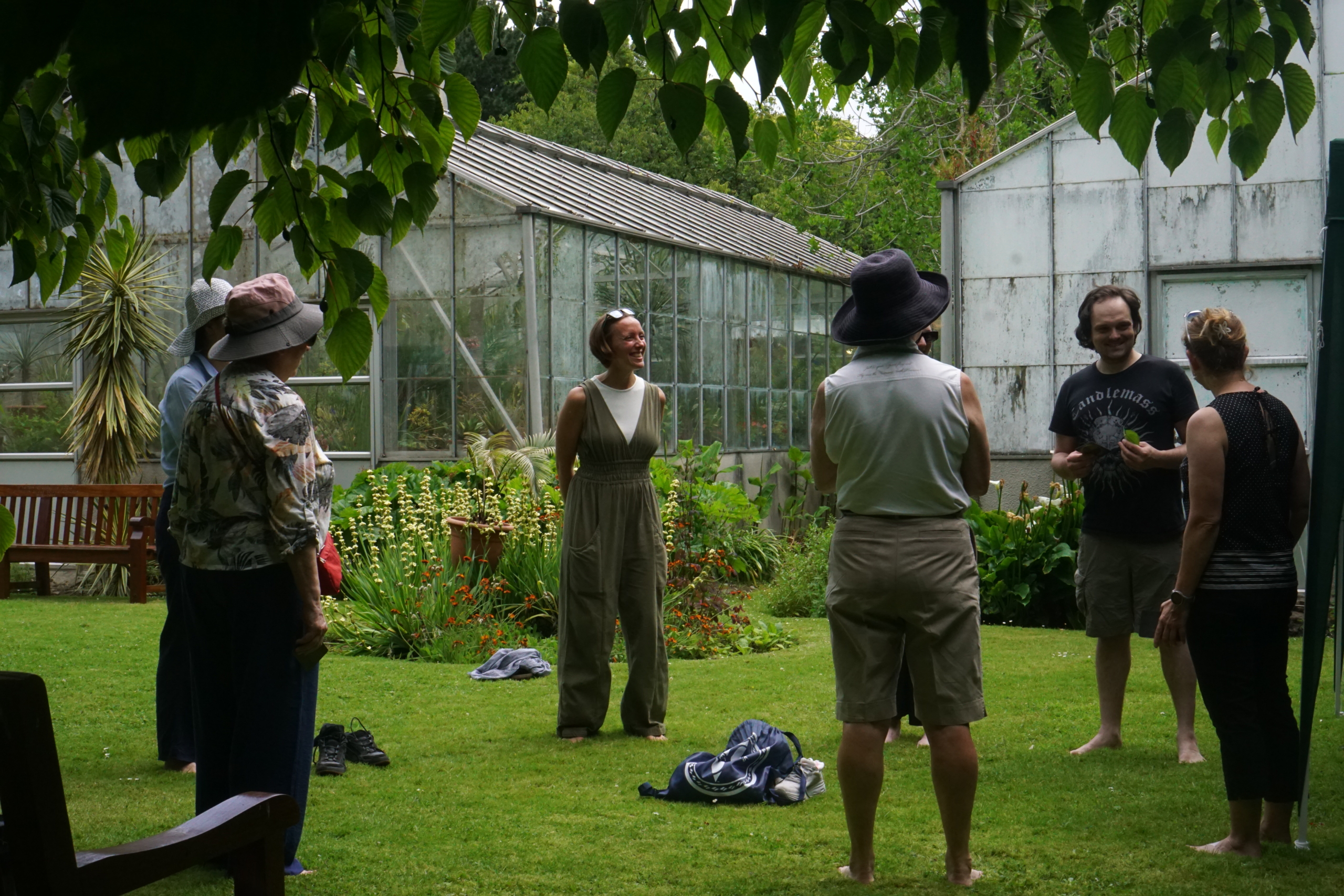
Opening circle during a forest bathing session in the TCD Botanic Gardens.
.
The results have been both encouraging and consistent. In one cohort of 58 postgraduate students, over 77% reported feeling much more relaxed after the session, while 74% experienced a significant improvement in mood. A similar proportion felt a much stronger connection to nature, alongside increases in mindfulness, feelings of being energised, and a reduction in stress . Importantly, 95% of participants agreed that the Trinity College Botanic Gardens are very suitable for forest bathing, highlighting that urban green spaces are not a lesser alternative, but a highly effective and accessible way of supporting wellbeing.
.
Participants’ reflections further deepen this understanding. Many described a noticeable reduction in overthinking and mental clutter, alongside a sense of grounding and emotional release. Others spoke about reconnecting with simple sensory experiences and feeling more present in their bodies and surroundings. For some, it offered a rare pause within the intensity of student life, creating space to reset and regain perspective. These experiences align closely with wider research showing that time in nature can reduce rumination and support emotional regulation (Bratman et al., 2015), reinforcing the role of shinrin-yoku as both a preventive and restorative practice.
.
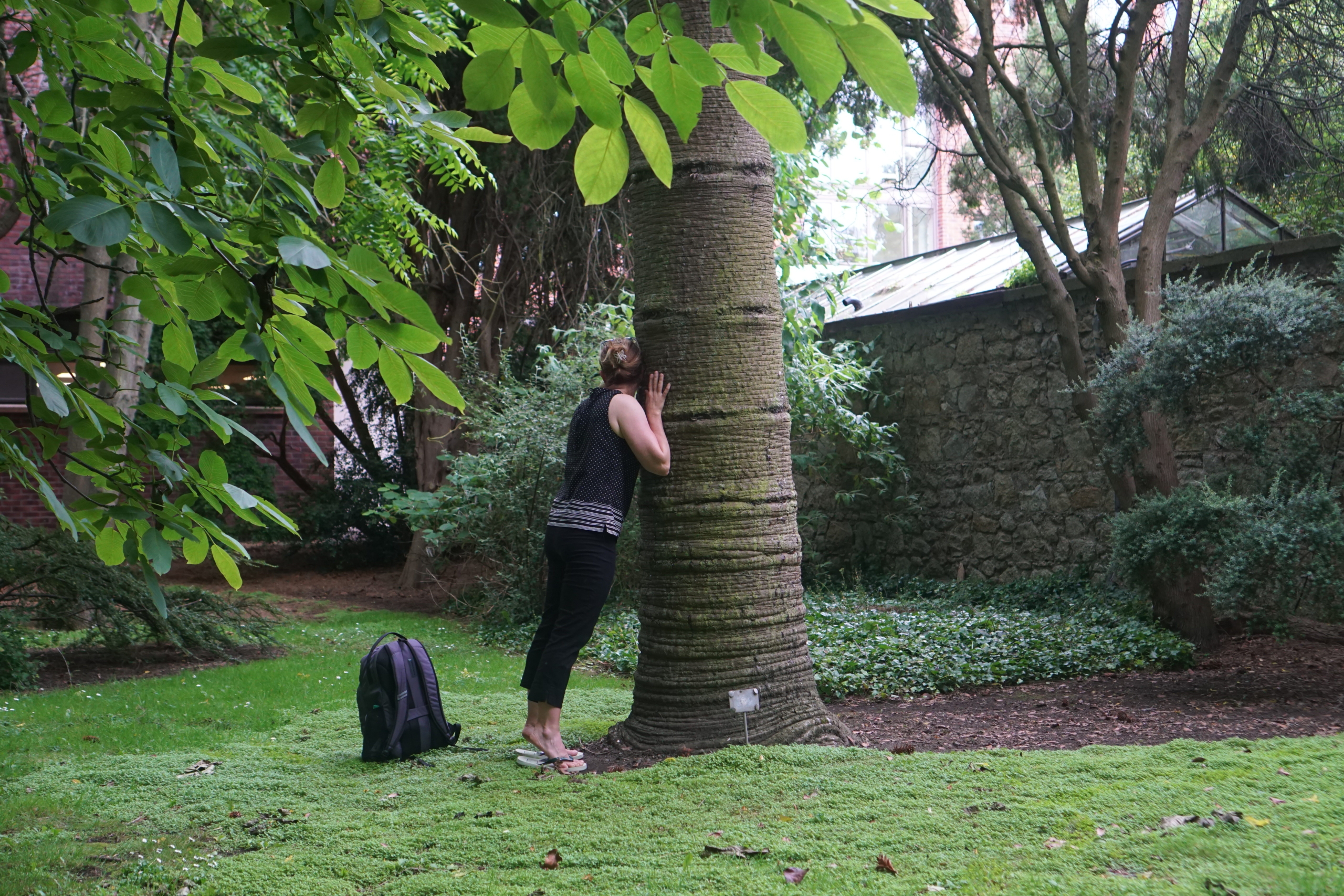
Connecting with nature during a forest bathing session in the TCD Botanic Gardens.
.
One of the most powerful aspects of shinrin-yoku is its accessibility. While ancient woodlands like the Vale of Clara offer a profound depth of experience, the practice itself does not depend on location. If leaving the city is not possible, parks, gardens, and small pockets of green space can still provide meaningful opportunities to engage with nature. What matters is not the scale of the landscape, but the quality of attention we bring to it. A short walk among trees, sitting quietly on a bench, or simply noticing the movement of leaves can begin to shift our internal state, with small moments of connection building over time into something more sustained and supportive.
.
There is something deeply resonant in bringing shinrin-yoku into an Irish context. Japan offers a framework grounded in both tradition and scientific research, while Ireland offers landscapes, both wild and urban, that naturally support this way of being. From the ancient oak woodlands of Wicklow to the calm of a city garden, the opportunity to reconnect is always present. Ultimately, shinrin-yoku reminds us that we are not separate from nature, and that by slowing down enough to notice, to listen, and to feel, we begin to return to a more balanced and grounded way of being, wherever we are.
.
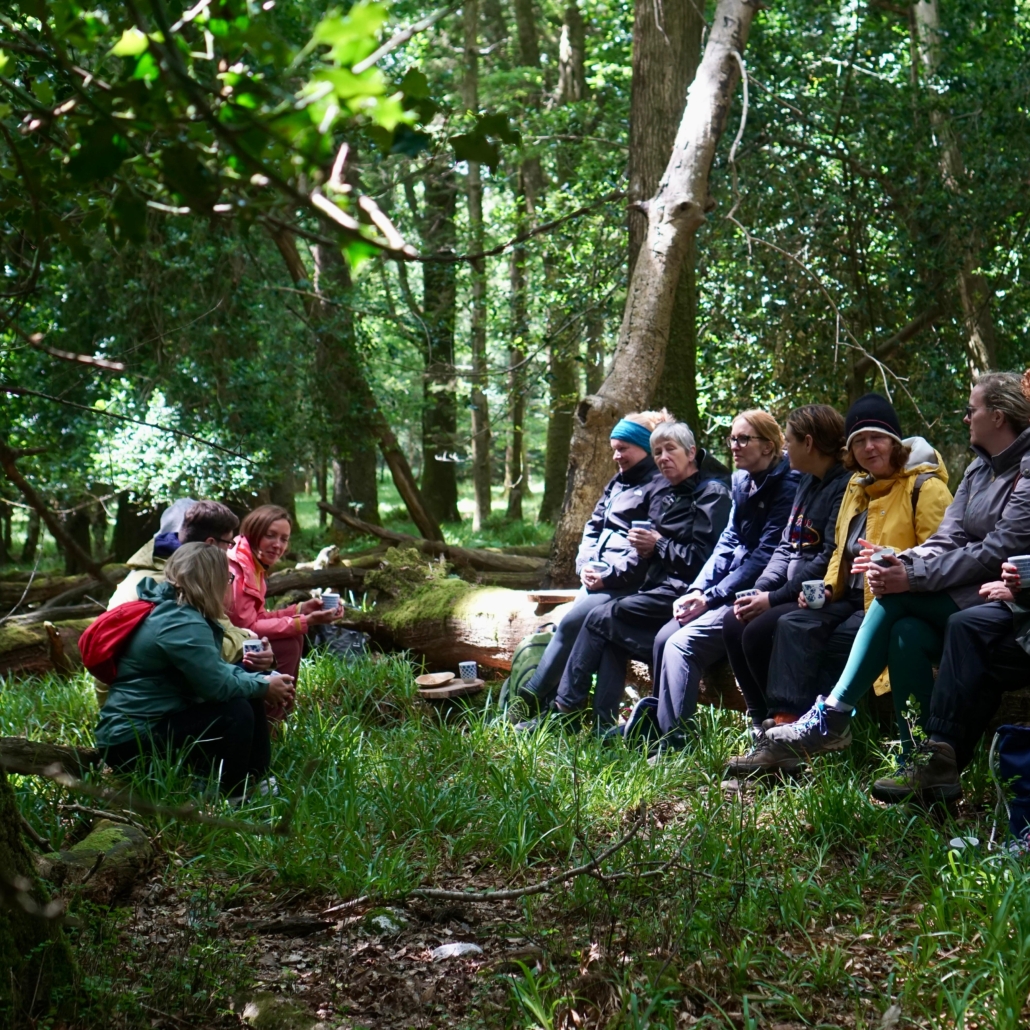
Closing tea ceremony after a shinrin-yoku session in the Vale of Clara.
.
Learn more: https://www.naturetogo.ie
.
References
Clifford, M. A. (2021). Your Guide to Forest Bathing: Experience the healing powers of nature. Red Wheel/Weiser.
Li, Q. (2018). Shinrin-Yoku: The Art and Science of Forest Bathing. Penguin Life.
Li, Q. (2010). Effect of forest bathing trips on human immune function. Environmental Health and Preventive Medicine, 15(1), 9–17.
Miyazaki, Y., Song, C., & Ikei, H. (2018). Preventive medical effects of nature therapy. Journal of Physiological Anthropology, 37(1), 5.
Park, B. J., Tsunetsugu, Y., Kasetani, T., et al. (2010). The physiological effects of Shinrin-yoku. Environmental Health and Preventive Medicine, 15(1), 18–26.
Bratman, G. N., Hamilton, J. P., Hahn, K. S., et al. (2015). Nature experience reduces rumination and subgenual prefrontal cortex activation. Proceedings of the National Academy of Sciences, 112(28), 8567–8572.
Twohig-Bennett, C., & Jones, A. (2018). The health benefits of the great outdoors. Environmental Research, 166, 628–637.
.
.
.